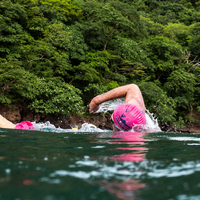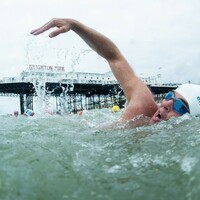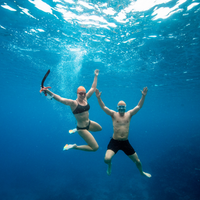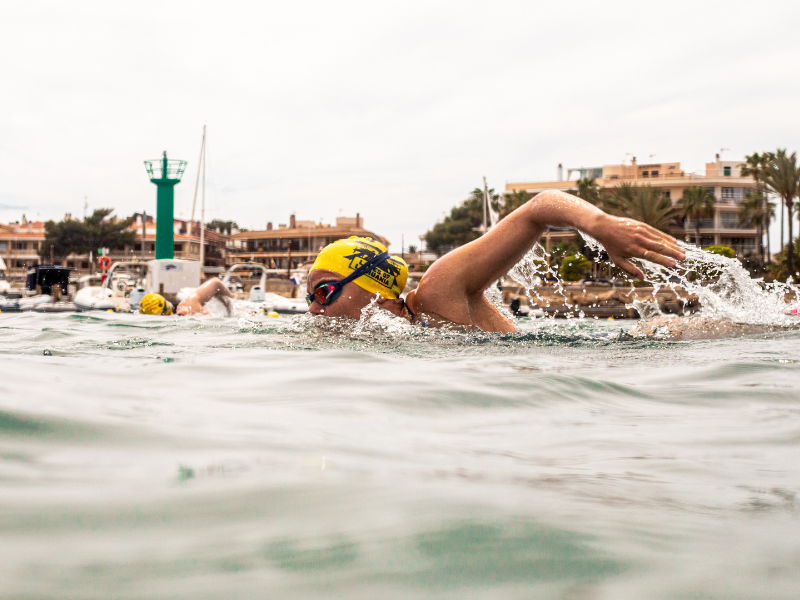
It's time to answer one of your most commonly asked questions...
There are a few things we're often asked that relate to being fitness-ready for our trips, like: "Will I be left behind? and "How fit do I need to be to enjoy a swimming holiday?"
It's important to remember that active holidays are still holidays and we will prioritise your safety and comfort at all times. While we do routinely swim each day, multiple times, you also have the liberty of being able to stop to tread water, cling onto a support kayak, or even exit the water onto a waiting boat if you like. Whenever you want to take a break you can do so - sometimes there are even opportunities to walk sections of the route as well. So, in short, we never enforce those strict rules of conduct reserved for official long-distance or marathon swims.
To learn more, dive into our official Training Plan below - a guide to use on your journey to ever-improving open water confidence and future swimming goals.
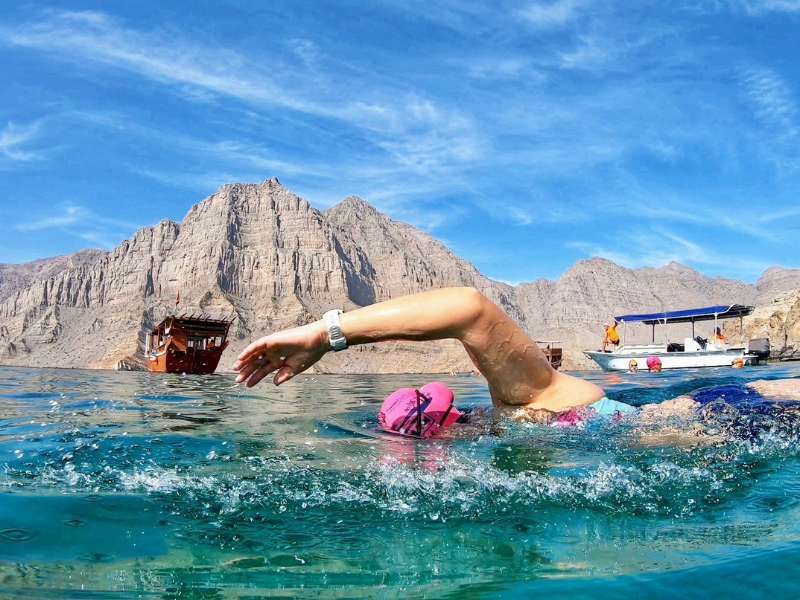
Of course, each of our trips is different in terms of difficulty and we have categorised our offerings based on optimal fitness levels and experience. This ensures you never swim further than expected and are spared any unwanted surprises during your travels with us. These gradings include:
- Leisurely/Beginner: These trips include shorter swims in less challenging conditions. They are best for anyone who is new to open water, building confidence, and looking for a more relaxed experience.
- Moderate: Your typical SwimTrek, including a few kilometres each day and several swims. These trips are best suited for more regular swimmers, who are used to being in deeper water and swimming in different conditions, like mild chop.
- Challenging: Things are getting a little more serious now - these trips feature longer distances in sometimes cooler waters and rougher conditions. You might venture further out at sea and spend longer with your fellow swimmers, matching paces and refining your technique.
- Ultra: Looking for a serious challenge? These Coaching Camps are built for those looking to take on marathon swims or iconic crossings, like the 'Everest of Swimming' - otherwise known as the English Channel.
"Thank you for this combination of swim training and step by step into to more and more difficult swims. Felt completely safe all the way and exceeded my own expectations!" - Christina V, Sweden (2025)
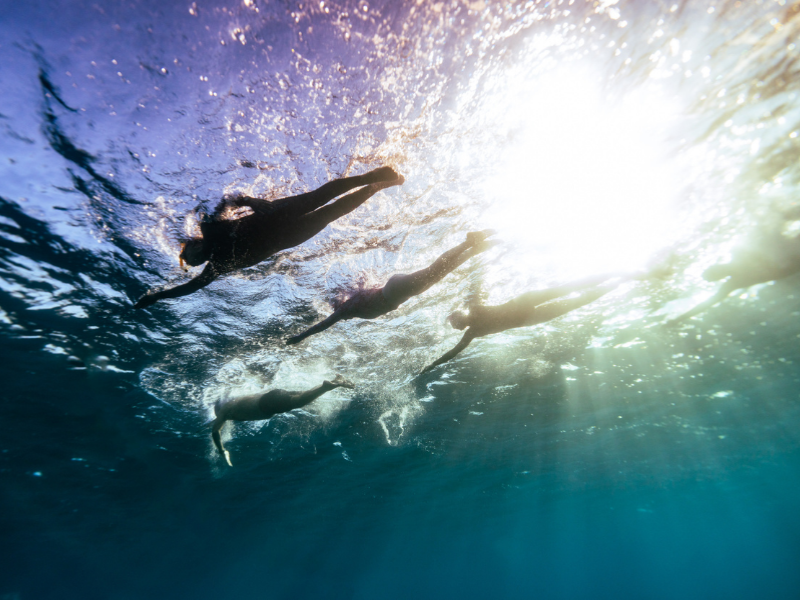
You can learn more about each of these gradings below. At all times, it's important that you feel relaxed during your swims with us. A solid cardio base is needed to control your breathing and swim in a more relaxed rhythm. We do advise that your train more regularly as you approach your departure date. Remember, one of the limiters to full enjoyment of your holiday is comfort - some guests may need time to condition themselves before leaping into cold water, waves, or depths they are unused to.
Here's a brief (and very basic) training plan for newcomers before you settle into your upcoming adventure:
- Swim at least once or twice a week
- At first, try to keep your sessions between 10 to 20 minutes
- Try to relax in the water and breathe calmly. Don't scramble or rush to exertion. Stop whenever you want. No drills yet!
- Your first target is to swim a single kilometre (0.6 miles) within 40 minutes.
Following are a few quickfire answers to some of your most Frequently Asked Questions":
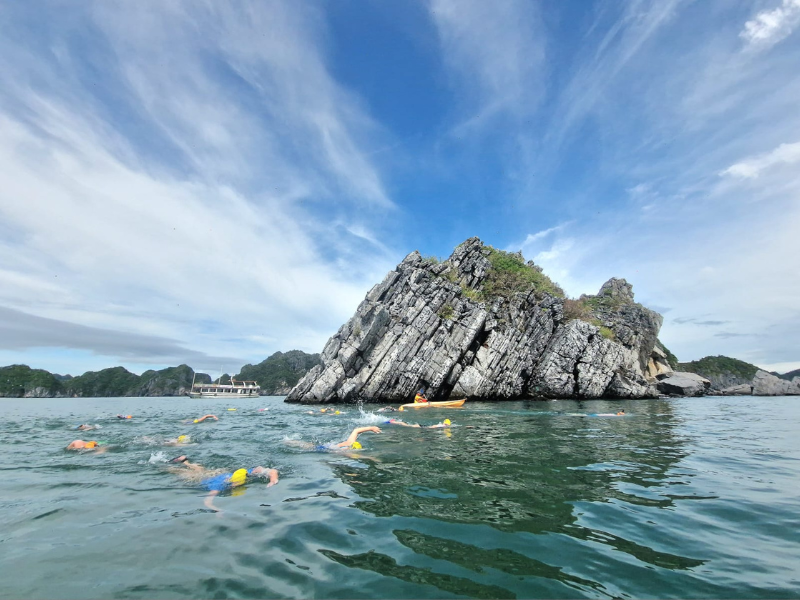
How far will I swim each day?: Daily distances vary, but on most of our trips we swim an average of 3-6 kilometres per day. This is usually split between one morning swim and one afternoon swim. Our Short Swims and introductory trips offer easier daily distances as well. Then there are Long Swims and Coaching Camps including daily distances of up to 8 kilometres.
Will I be able to swim the distances in the itinerary?: Even if the daily distances are more than you're used to a single session, we break up the day with several shorter swims. Most people surprise themselves with how far they can swim with breaks in between. We also avoid the monotony of bouncing up and down a pool, chasing lane markings. On our trips, there will be plenty to distract you both above and below water. You also have the psychological advantage of being able to see your target destinations - plus, increased buoyancy in seawater and constant support and encouragement too. These factors often contribute to you being able to swim greater distances in open water than the pool.
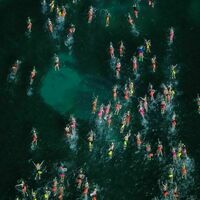
How fast do I need to be able to swim?: Everyone swims at different speeds on our trips. A kilometre can be swum by our guests in anything from 10 to 40 minutes. The minimum requirement is being able to swim a kilometre within 40 minutes. The average speed of our swimmers is between 15-20 minutes per kilometre. We cater for all speeds though and we will conduct an acclimatisation swim at the start of each trip, which allows us to group swimmers of similar speeds. We usually have up to 3 speed groups setting their own paces.
Which strokes do people swim?: As you might expect, front crawl (freestyle) is the most popular stroke, allowing you to see more underwater as you swim as well. We do also often have a few breast-strokers. The different groups allow you to swim whatever stroke you want, and you can wear fins for assistance too.
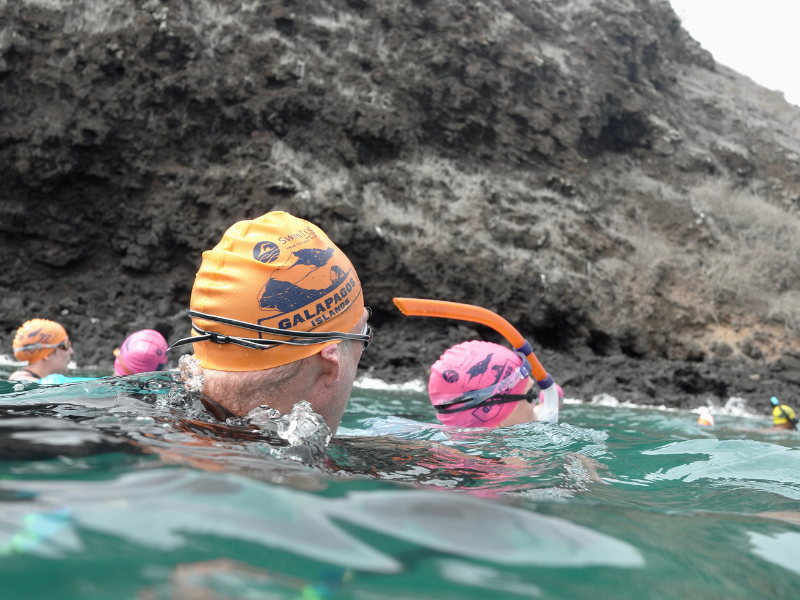
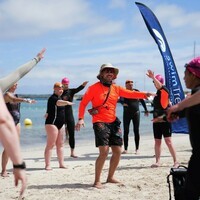
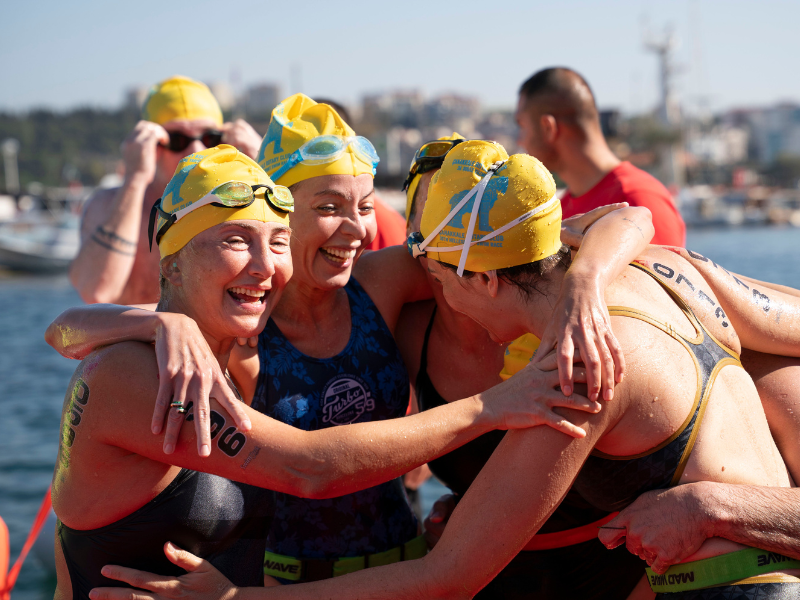
To recap, you will not be left behind on our trips no matter how slowly you want to take it. For your support, we provide a mixture of kayak and boat support, with guides constantly looking out for you. You will swim in groups regulated depending on the pace of each swimmer. So, if you're an open water newbie you don't have to worry about chasing the bubbles of someone training for a marathon event. Instead, you will find your place within a pod of similarly matched swimmers. Constant company will help you to build confidence out there.
On most trips, support consists of a main boat and up to two inflatable boats. If we are swimming in lakes and rivers it is less likely we will use motorised vessels, favouring support kayaks instead. These are your lifelines to provide safety cover, drinks and snacks, as well as assist with improving your technique.
Rest assured, every SwimTrek Guide is trained in first aid, but it is important to be aware that medical facilities might not always be easily accessible where we are swimming. We do ask guests to complete a Health Declaration before we depart on any of our trips.
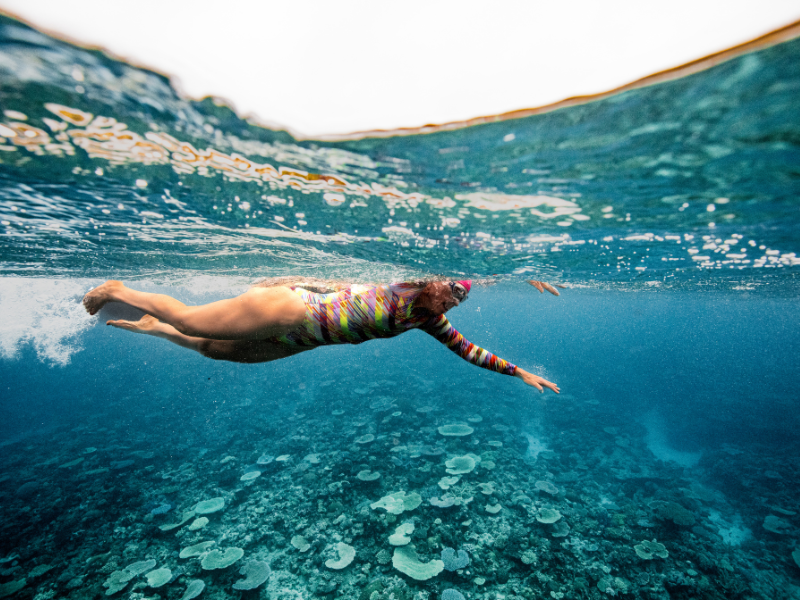
The second question highlighted above - ""How fit do I need to be?" - requires a slightly longer answer, but, in short, it really depends on the type of trip you decide to do with us, ranging from options that are Best For Beginners to our wide array of Coaching Trips including camps for marathon swimmers.
Now, let's look in more detail at our grading system, ensuring you choose the perfect trip and daily distances for your training and fitness goals.
What To Expect: Leisurely/Beginner Grading
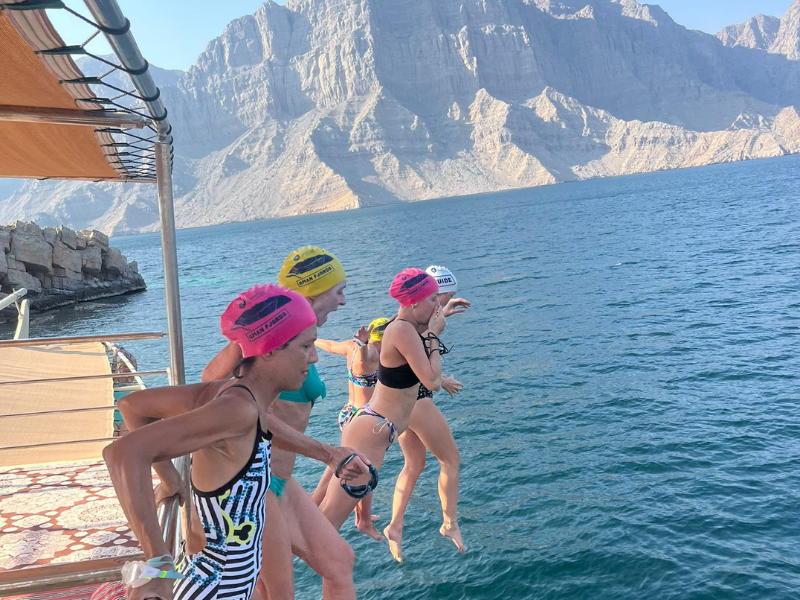
It's important to check the 'Trip Information' of each page before you make your pick. Our Leisurely and Beginner options include variations with daily distances from 2 to 4 kilometres. The duration of these trips can vary between 3 and 7 days as well. One example of a longer trip is our Oman Fjords - Short Swims, running for 7 days in total. You will be swimming up 4 kilometres a day on that one, so it sits at the more difficult end of our introductory scale. Whereas our Discover Open Water - Mallorca trip is just 2 kilometres a day and runs for 4 days from a sunny Mediterranean base - a great way to ease yourself into this new hobby.
- How to be prepared?: As we said, we do require swimmers to swim a kilometre within 40 minutes prior to our departure. Make that your target before you begin a more Leisurely open water holiday with us. You can start in a pool and then try short open water swims in calm conditions with support and tow floats too for added safety. Get a feel for that wilder water!
"As a slow pool swimmer with little open water experience, the SwimTrek training in Mallorca was superb. I learned SO much in such a short time and have a newfound confidence in the water." - Diane M, Spain (2025)
What To Expect: Moderate Grading
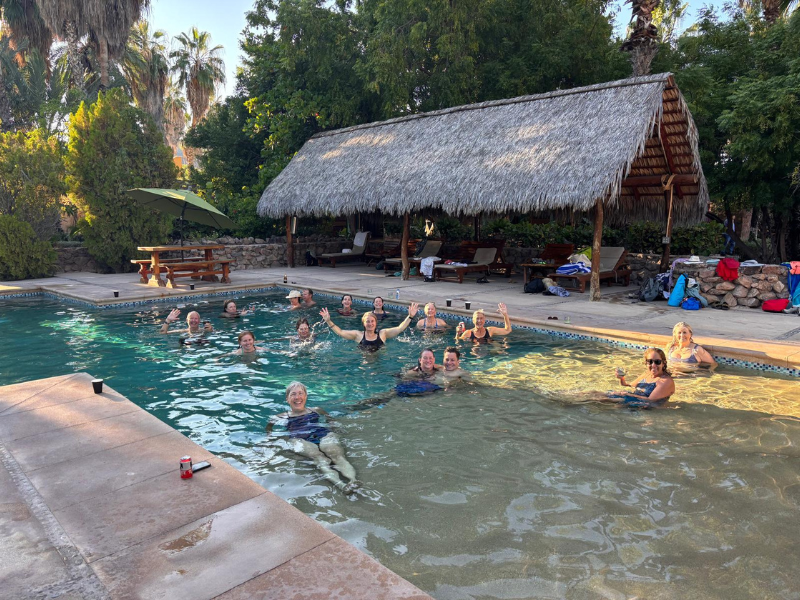
For more confident open water swimmers, our Classic and Liveaboard options mostly run for 7 days with 5 kilometres being swum each day on average. The shortest daily distance is around 3 kilometres in varying conditions, and trip durations range from 4 to 8 days. For example, our Egadi Islands - Short Swims is one of the easier trips in this category, travelling for 7 days with just 3 kilometres swum each day.
For the adventurous, our popular Galapagos Explorer Liveaboard involves swimming up to 4 kilometres a day over the course of 8 action-packed days. Then we have our Hellespont single-day race event, running every August, which launches swimmers into a course that spans 4 kilometres across the Dardanelles strait from Europe to Asia.
- How to be prepared?: For these trips, we would hope that you already feel comfortable swimming in open water in varying conditions. We are not expecting you to go out in swell, battle currents, or swim more than a couple of kilometres at a time - unless you are swimming the Hellespont.
"I can´t express enough what this trip meant for me and my wife. The amount of animals we´ve seen in and out of the water was incredible! And the guides were fantastic!" - Ines B, USA (2025)
What To Expect: Challenging Grading
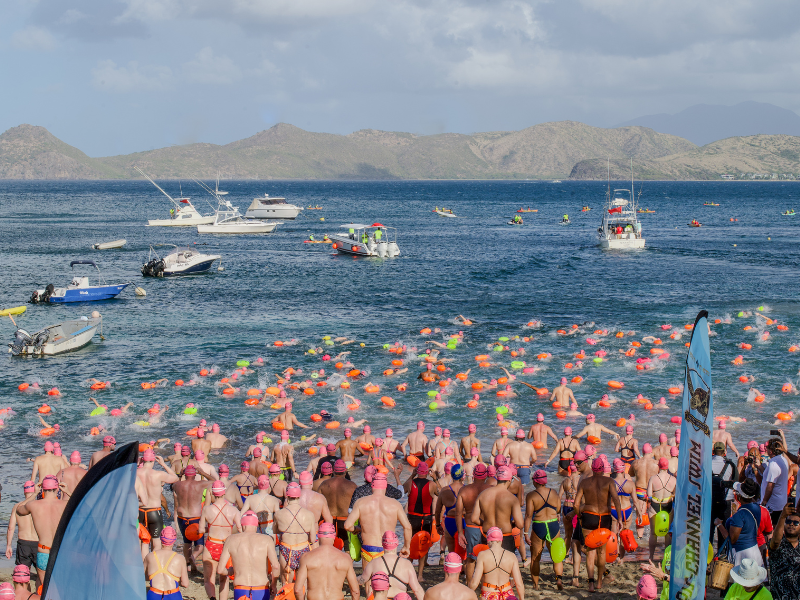
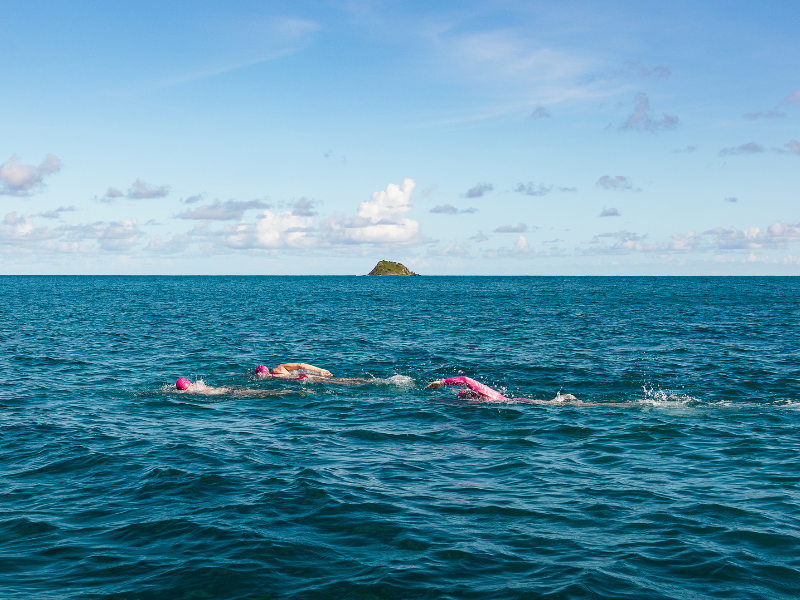
These Challenging trips can last between 4 and 7 days with distances from 4 to 8 kilometres each day, spread over multiple swims. You may be faced with cold water (don't worry, wetsuits are allowed too) and rougher sea conditions to increase the difficulty of a few swims - some would say to add more excitement as well. One example of this is our Isle Of Skye trip in Scotland, where sunny weather isn't always guarantted. Then we have events like our swim between Caribbean Islands for the Nevis To St Kitts Cross Channel Swim, which is a 4-kilometre race across 'The Narrows'. Those of you who don't like deep water need not fear - you can see the seabed the whole way across!
- How to be prepared?: To train for colder waters, you may benefit from joining a local club and swimming through winter for the first time. Unheated sea pools are the perfect place to start your laps in safe conditions as well, but we understand these are quite rare - the shallow edges of slow-flowing rivers, lakes or lochs may give you the chilly, routine immersions you need to build tolerance. Even just brief, repeated submersions will wake your senses, improve circulation, and basically train your body how to react over time. You can learn more about cold water swimming in our 'Introduction To Cold Water' blog.
"I didn't think I would ever be able to accomplish an open water event like this until I looked into SwimTrek. They ensure you are supported and safe the whole trip. I have created lifelong memories through my cross-channel swim from Nevis to St. Kitts..." - Stephanie W, USA (2024)
What To Expect: Ultra Grading
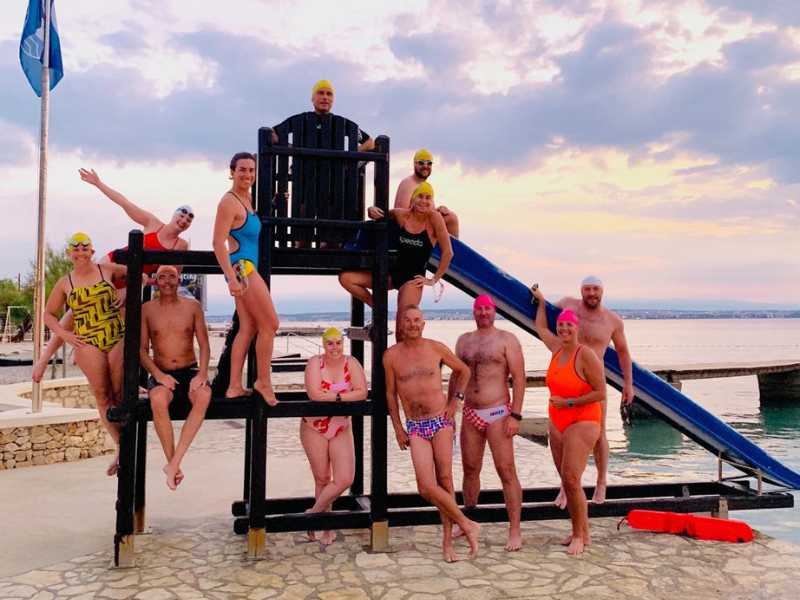
Finally, only 1 of our trips currently qualifies for our Ultra Grading, which is the Channel and Long Distance Training Camp - Croatia. This trip lasts 6 days and pushes swimmers to complete up to 8 kilometres each day in all kinds of conditions and whatever weather is thrown our way. It is the ultimate challenge to prepare you mentally and physically for long distance events - more than 200 successful English Channel solo swimmers completed this trip in the past!
- How to be prepared?: 8 kilometres a day is a challenge worthy of the most experienced open water swimmers, training for endurance events and already used to the ponderous slog of crawling for long distances. That said, you may surprise yourself with how far you can swim and how long you can last when you have the right support!
"The marathon training camp in Croatia was one of best things that I have ever done. The guides were fantastic at supporting everyone, the group were great company, and the location was beautiful." - Oona B, UK (2025)